Angie Martinez: Dead Secrets (Part 1)
Many had came and warned Angie to destroy the tape!
Angie knew this day was coming…
Long before god could let her pray about it!
Tear dropped out her eyes to the new reports of Charlamagne Tha God being strangled to death with a Helen Williams wig.
Angie: If only I did not let him hear the org. tape before chopping it up. ( Whispering to herself)
Midnight at the Martinez Manor
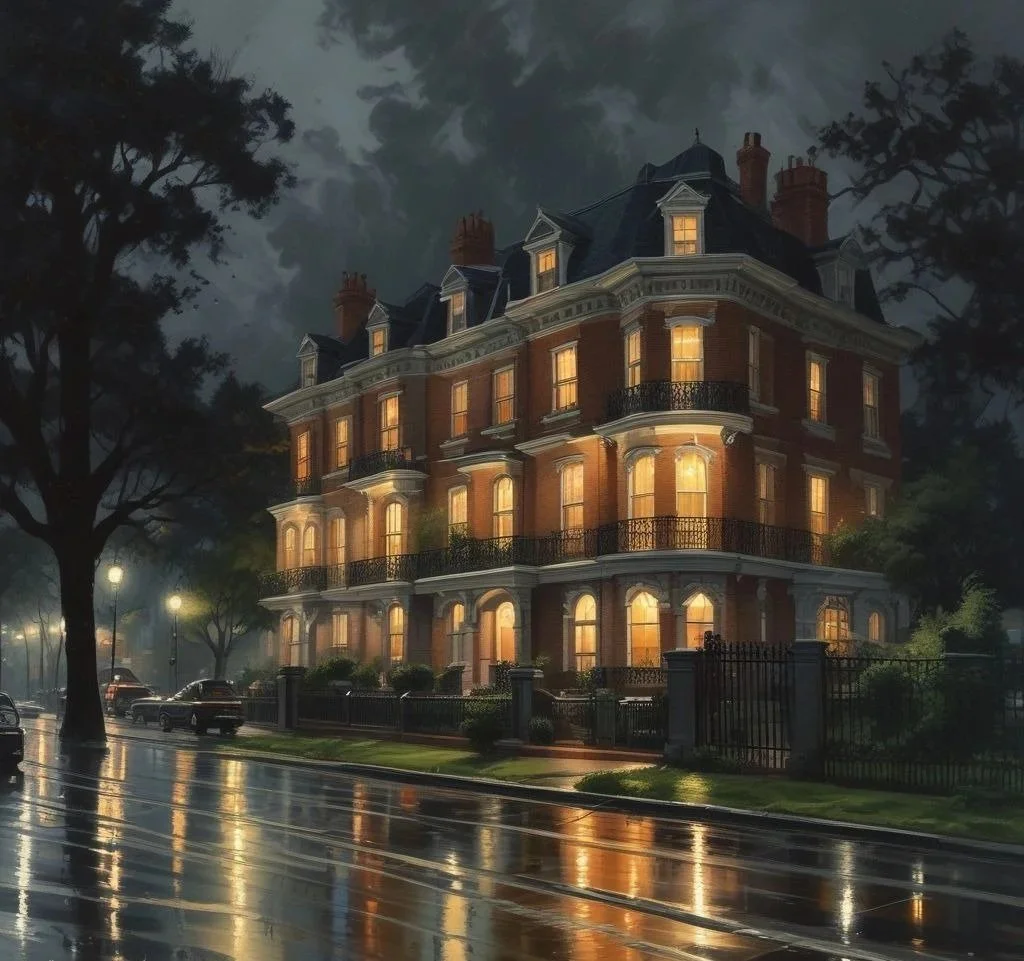
The rain had been falling on the avenues of Queens for hours, drumming a syncopated beat against the cracked windows of a brownstone that had survived more block parties than most of the city’s boroughs could count.
Somewhere inside, the low hum of a boom box pulsed through the walls, a classic vinyl spin‑out of “Your Beautiful - James Blunt” that seemed oddly out of place in a house that usually resonated with the softer tones of Angie Martinez’s radio voice.
A sleek black Audi pulled up on the curb, headlights cutting a clean line through the mist.
From the driver’s seat, a man in a crisp, navy suit stepped out, his shoes barely making a sound on the wet pavement.
He was the architect of “The Blueprint,” the poet who turned “Hard Knock Life” into a boardroom anthem.
It was Shawn “Jay‑Z” Carter.
A second vehicle, a matte‑black Mercedes with the faint scent of leather and ozone, rolled to a stop a few feet away.
The door opened, revealing a figure in a simple black t‑shirt, a pair of gold-plated frames perched on his nose, and a jaw set with the same determined edge that had driven “Nasir” into the annals of hip‑hop history.
He was Nas, the lyrical chronicler of “N.Y. State of Mind,” and the ghost of “Illmatic” that still whispered through the city’s alleys.
Both men moved in unison toward a stately oak door, each step echoing a rhythm that seemed to pre‑write the story about to unfold.
Angie ready in embracing the soon to be!
Bang. Bang!
The door swung open a fraction, the night’s chill seeping in!
Angie Martinez stood there, hair pulled back into a tight bun, her eyes sharp as a cutter’s blade and her smile—half‑smirk, half‑curtain—holding a thousand unspoken questions.

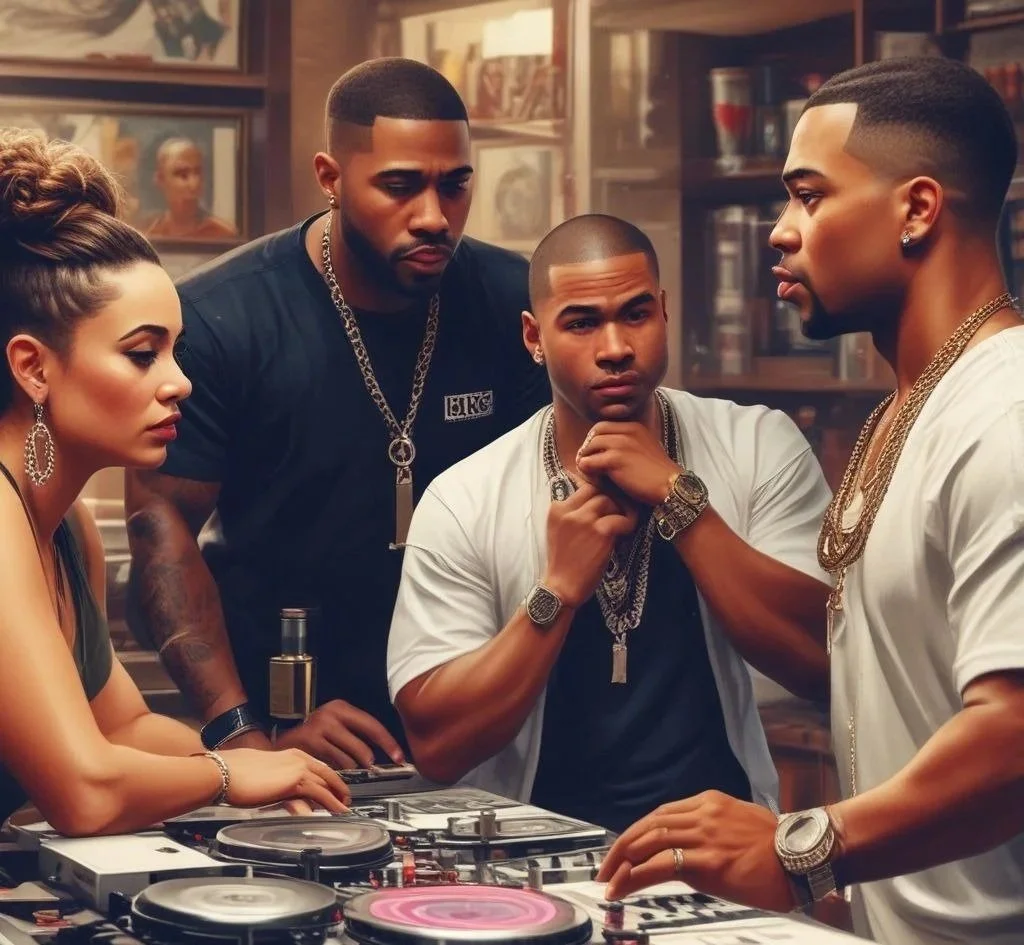
Jay-Z: Yo, Angie, Jay‑Z said, his voice low but resonant, tinged with the poise of a man who’d negotiated a billion‑dollar deal & still remembered the smell of the Bronx block where he first freestyled.
Jay-Z: You got somethin’ we gotta talk about.
Nas stepped forward, his gaze never leaving hers. “It ain’t just talk,” he added, his tone a blend of curiosity and urgency. “It’s history. It’s the tape.”
Angie raised an eyebrow, her hand instinctively sliding to the doorbell, which had long since been replaced by a sleek keypad. “You know I don’t hand out secrets for free,” she replied, a chuckle slipping through. “Especially not the kind that could rewrite the whole game.”
Jay‑Z’s grin widened, an almost imperceptible flash of the Brooklyn streets where his dreams had started. “We ain’t askin’ for a favor. We’re askin’ for truth.”
Nas’ voice softened, the weight of his words cutting deeper than any beat.
Nas: Tupac left us more than verses.
Nas: He left a map. A ledger. A confession. And the world’s still lookin’ for the key.
The rain hammered the window panes, each drop a metronome that seemed to count down the seconds. Angie's eyes flicked toward the hallway, where a faint glimmer of a metallic case could be seen—perhaps the source of the legend that had haunted the culture for decades.

Angie: Come on in, she said, stepping aside, a gesture that carried both invitation and warning.
Angie: But once we open that box, there’s no going back.
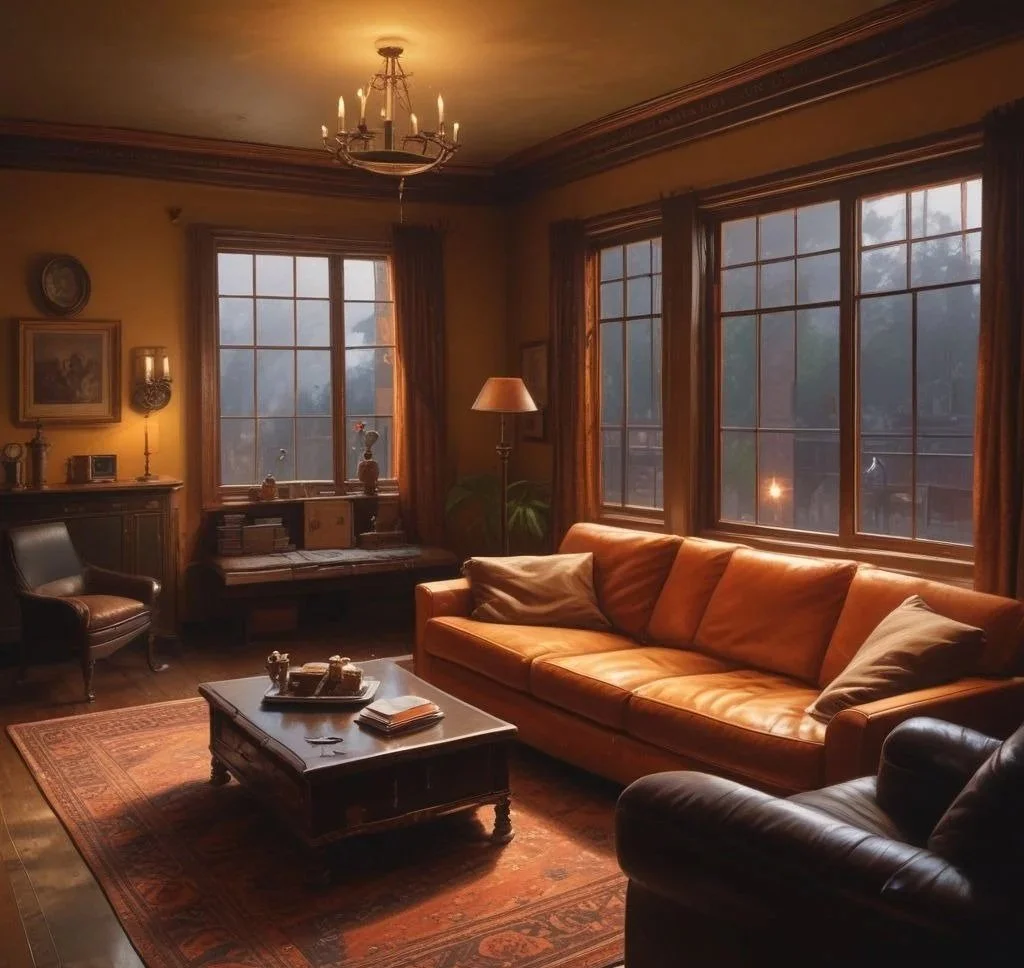
Inside, the living room was bathed in a soft amber glow, the faint scent of incense curling through the air. On a low table sat a black leather case—its surface worn, a single, stubborn strap keeping its contents concealed. It sat there like a relic, as though waiting for the right hands to lift it.
Jay‑Z knelt, his hand hovering just inches above the case.
He could almost hear the echo of “C.R.E.A.M.” in his mind, a reminder of the hustle that brought him here.
He looked at Nas, whose stare was fixed, his mind flickering through verses that once painted the city’s struggles in stark ink.
Nas: Let’s do it.”
The strap gave a soft click, and the lid lifted. Inside lay a reel of tape, its edges frayed, a label in rough, handwritten script: “TUPAC - 1996 - DO NOT DISTRIBUTE”.
Around it, a series of crumpled photographs of black‑and‑white images of Tupac in raw, intimate moments: a smile after a prison visit, a whisper in a dimly lit hallway, a handwritten note that read, They want us silent, but beats keep the pulse alive.
Angie placed the tape on the coffee table, her fingers brushing the surface as if testing its temperature. “This tape… it’s rumored to have everything.
The truth about the East Coast‑West Coast beef, the night he was shot, the politics, the conspiracies.
Angie: Some say it even has—” She paused, looking at the two giants before her.
Angie:“—the verses he never got to lay down.”
Jay‑Z lifted his eyes, a glint of reverence flashing across them.
Jay-Z: If Tupac kept something for us, it’s not just about fame or drama. It’s about the struggle we still fight every time we step up to a mic.
Nas let out a breath, his shoulders relaxing just a fraction.
Nas: The world’s been waiting for the real story. Not the one the mainstream feeds us, but the one that shows why the poet was also a prophet.
The three of them stood in a silence that seemed louder than any club’s bassline.
Outside, the rain fell harder, as if trying to drown the moment, but the house seemed to hold its breath, preserving the weight of the moment within its walls.
Finally, Angie reached for the tape player perched on a vintage shelf, a relic of analog days.
She slid the tape in, the reels whirring to life.
A crackle filled the room, once, twice, before a voice, unmistakably Tupac’s, rose from the speakers, low and resonant, half‑whisper, half‑roar.
Tupac: Yo, if you’re listenin’ to this, then you already know the game ain’t never been the same. So many stories… so many lies.
Tupac: But we ain’t here to judge.
Tupac: We’re here to reveal. This is my truth. This is the world’s truth, unfiltered.
(It’s time we all hear it.)
For a moment, the track was interrupted by a series of beats of an old-school drum pattern that seemed to pulse through every heart present, the rhythm of a city that never slept.
The words that followed painted a picture of betrayal, unity, fear, and hope—of a poet who saw beyond the glitter of fame to the cracked pavement where his community survived.
As the tape played, Jay‑Z and Nas exchanged glances.
Their rivalry had turned into mutual respect, their competition a shared mission: to ensure that what fell out of that magnetic reel would ripple through the culture, re‑shaping the narrative for a new generation.
Angie watched, her face lit by the glow of the monitor, a soft smile curving her lips.
She knew the world would never be the same after this night, but she also understood the weight of the truth, how a single piece of recorded confession could ignite a fire that burned brighter than any spotlight.
The rain outside finally eased, the streets of Queens glistening under the early dawn light.
In that modest living room, three legends, one with a voice that had always reached the airwaves, two with verses that had shaped a generation that stood on the brink of history, ready to let the world listen to the hidden Tupac tape that would expose everything…and perhaps, finally, bring a little peace to the ongoing war between myth and reality.
The Hidden Tupac Tape
The tape hissed, then fell silent, as if holding its breath.
For three heartbeats, the room was a vacuum—until Tupac’s voice emerged, low and gravelly, like a man speaking from the bottom of a well.
Tupac: I didn’t start no war,” he began, his tone measured
Tupac: but I know how to finish one.
Jay-Z’s fingers drummed the armrest of his chair, a nervous rhythm.
Nas leaned forward, elbows on knees, his gold frames catching the lamplight like a mask.
Angie stood motionless, her gaze locked on the tape player as though it might spontaneously combust.
Tupac: They made it a west coast, east coast thing,” Tupac continued, “but it’s deeper than that. It’s about who gets to tell the story. Me, Biggie—we were just two kids shoutin’ over the noise, thinkin’ our voices could bend the world.
Tupac: But the game? It don’t want truth. It wants drama. It wants you to forget the block, the struggle, the reason we ever picked up the mic.”
A beat. Then, a laugh—bitter, tired.
Tupac: Man, I thought I was buildin’ a legacy. Turns out I was just markin’ graves.
Jay-Z exhaled sharply, his voice a murmur.
Jay-Z: He’s talkin’ ‘bout Biggie…?
Nas shook his head.
Nas: “No, he’s talkin’ at him. Like he knew it was comin’.”
The tape crackled onward!
Tupac’s voice dipped into something raw, something unfiltered.
Tupac: They’ll show you the headlines—911, shots fired, enemies on every corner—but they won’t show you the letters.
Tupac: The ones Biggie wrote me, beggin’ for peace. The ones I burned. Thought I was protectin’ my crew, my city. Now? Now I think I just played into the script.”
Nas closed his eyes. The words were a mirror, reflecting the fractured era he’d watched from the sidelines, a time when every bar could be a bullet.
Illmatic had painted Queens in shadows; this was the sequel no one wanted.
Tupac: “Jay,” Tupac said suddenly, his tone shifting—direct, as if he could see the room. “You, Nas… you both made it out. But don’t you forget the weight of the crown. When you talk ‘bout legacy, talk ‘bout the kids still gettin’ shot for bein’ loud. And Nas… when you say ‘NY State of Mind,’ make sure it’s ‘bout the struggle, not the stardust.”
Silence.
Jay-Z stood abruptly, pacing.
Jay-Z: This isn’t just a confession. It’s a testament. He’s callin’ out the industry, the politics, the way we let the narrative rot.” His voice hardened.
Nas: But if we drop this, it’s a bomb. Labels, old allies—they’ll tear each other apart. And the haters? They’ll twist it.
Jay-Z: Turn Tupac into another ghost..
Nas ran a hand through his lost hair, the ghost of a laugh escaping him. “
Nas: Or we let it be a psalm, A reminder that the pen’s still mightier, Tupac didn’t want drama.
Nas: He wanted accountability!
Nas: Maybe it’s time we let the world hear the man they tried to turn into myth.
Angie, who’d been quiet, finally spoke.
Her voice was steady, but her hands trembled as she picked up one of the photographs. A grainy shot of Tupac, smiling faintly in a prison corridor.
Angie: He knew someone’d find this someday.
Angie: The note’s in code… Spoken word, backwards beats, a cipher hidden in the noise.
Hov didn’t just want it heard. He wanted it decoded.
Jay-Z froze!
Jay-Z: You saying this tape’s got more… layers?
Angie: Every legend does, she said softly.
Angie: But you ain’t just legends, You’re the ones who still care enough to dig.
Nas glanced at the tape player, then at his longtime rival.
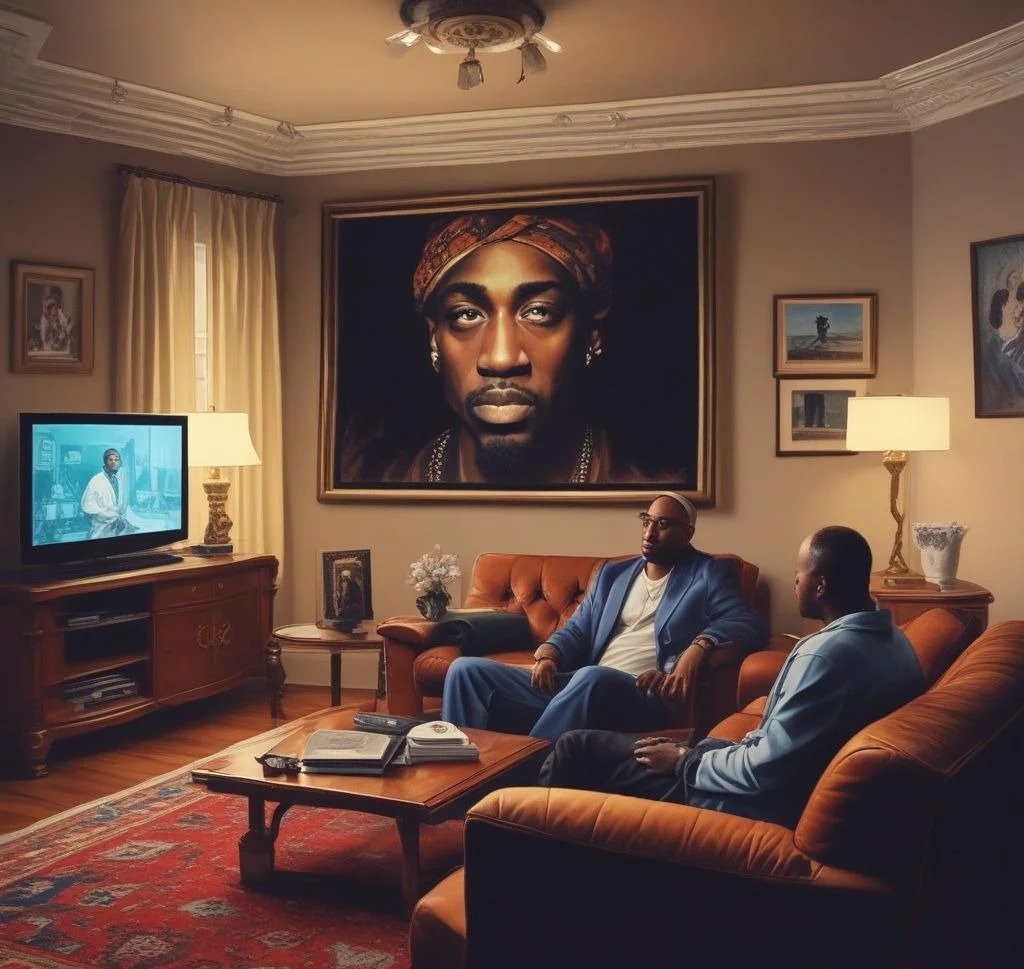
For years, their rhymes had clashed like steel on steel. Now, they stood on the edge of something greater than a chance to honor a brother’s truth instead of weaponizing it.
(Jay-Z nodded)
Jay-Z: We release it. But we control the narrative. A documentary. A tribute to the why, not the what.
Jay-Z: Tupac’s words, his way!
Nas grinned, the first real smile since they’d entered. “Now you talkin’. Let the kids hear the fire behind the fame.”
Angie placed a hand on the tape.
Angie: Then let’s make sure the world’s ready.”
As dawn broke over Queens, the rain-drenched streets glinting like new records under the sun, the three of them sat in the amber glow of the living room, the tape’s final minutes still spinning.
Tupac’s voice, aged yet urgent, filled the air:
Tupac: Keep your eyes on the prize, y’all. The truth don’t die. It just waits for the right hands to hold it.”
And for the first time in decades, the weight of the truth felt less like a burden—and more like a beat worth sharing.
The tape whirred, then slowed in its final moments stretching like shadows at sunset.
A high-frequency tone pulsed beneath Tupac’s last words, almost imperceptible, like a heartbeat buried in static.
Angie didn’t move.
She just stared at the cassette, her breath shallow, her fingers tracing the edge of the player’s rewind button.
Angie: Wait,” she whispered. “It’s not over.”
Jay-Z turned.
Jay-Z: What?
Angie: That tone, she said.
Nas: It’s not noise. It’s a carrier signal. I’ve seen this before—Pac used to hide messages in his beats. Backwards lyrics, layered frequencies. He called it echo code.”
Nas leaned in. “You’re saying the real message is underneath?”
Angie: Not underneath,” Angie corrected.
Angie: Inside. Like a record within a record.
Angie: You need the right equipment—reverse playback, waveform isolation, maybe a spectral analyzer.
Angie: This wasn’t meant to be heard once. It was meant to be uncovered.”
Jay-Z exhaled through his teeth, eyes narrowing.
Jay-Z: And how many people even know how to do that?”
Angie: Not many, Angie said!
Angie: But there’s one guy, Down in Bed-Stuy!
Angie: Former cryptographer for Def Jam’s sound lab…
Angie: Remember he went rogue after Biggie’s autopsy report went missing. They called him The Archivist.”
Nas stood!
Nas: Then let’s go.
At random a gun is pulled and goes off in Angies place!
Someone drops to the floor???????????????????????????
(Silence)