Bill Clinton Vol.1 : Island Love Secrets (Part 1)
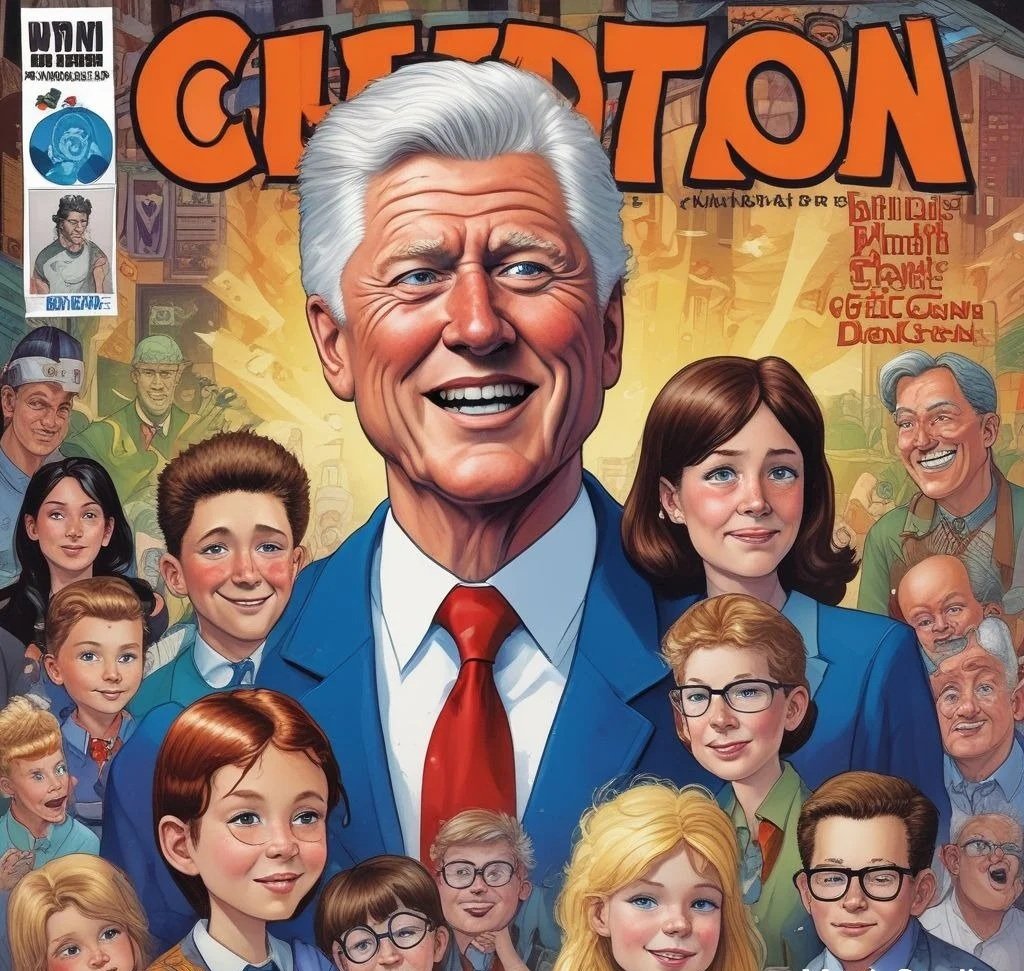
Unlocks: Feb. 27 (In Honor Of Chelsea Clinton Birthday)
The Island of Teeth
When the sky fell on the little prop‑plane, most of the world’s noise went quiet, leaving only the whirr of the engine, the shudder of the wings, and the shrill cries of children.
The aircraft dipped, rolled, and vanished into a thick blur, splashing into a lagoon no larger than a island.
When the water finally settled, the wreckage to the hearts of children lay in a tangled nest of metal and broken seats, half‑submerged in a shallow cove whose sand was as white as bone.
The island was a dome of towering palms, twisted mangroves, and a low fog that clung to the ground like a living thing.
The children with random names like Maya, Jules, Anya, Sam, Tomas, Priya, and little Eli stood on the shore, their lungs burning with salt and fear.
“Is anyone hurt?” Maya asked, wiping seaweed from her hair.
“Just my arm, the last guy held me down in punishment” Jules croaked
As if he was holding a splintered wing of the plane that stuck out of his elbow like a broken feather.
The island, they soon learned, was not empty.
(but full of horny adults)
At first, the monsters were whispers.
A low grinding from the mangroves, a flicker of movement behind a coconut tree, a sudden rustle in the sand that made the kids’ hearts beat a frantic march.
Then, as night fell and the stars spilled cold silver over the water, the whispers grew into snarls.
It began with a guttural roar that rolled off the cliffs and slammed into the beach like a wave of stone.
From the shadows emerged the first of them: a creature the size of a canoe, its skin slick and mottled with algae, eyes like dark pearls set deep in a cavernous maw.
Its teeth hundreds of them, long and serrated—glimmered in the moonlight. It lunged, and the sand beneath it churned like quicksand.
Maya screamed, but a sudden gust of wind blew the sound away, and the creature’s jaws missed her by a breath.
It turned, its head snapping toward the mangrove where a low, guttural humming rose from the roots.
From the tangled vines, a second monster rose—a hulking, translucent thing that looked like a giant leech wrapped around a tree. Its body was a mass of tendrils that glowed faintly, pulsing with a sickly green light. When it reached the beach, its tendrils writhed into the sand, digging like fingers searching for prey.
Priya, the oldest of the group, gathered the children in a circle and whispered a plan that felt half‑mad and half‑miracle.
“Listen,” she said, “they’re not hunting us. They’re hunting… something else. They’re drawn to the sound. We can’t stay quiet. We have to make them think we’re… something else.”
Maya’s eyes widened. “What do you mean?”
Priya held up a piece of broken fuselage, a jagged slice of metal that still shimmered in the moon’s glow. “We’ll make noise, but we’ll hide the source. We’ll lay these around, make them think we’re the island itself.”
The kids spent the next hour dragging the plane’s twisted metal through the mud, burying it under the sand, beneath the mangrove roots, even in the shallow water where the algae‑creatures crawled. They hammered rocks together, created rhythmic clangs with the ship’s rivets, and sang a low, humming lullaby they’d learned from the pilot’s radio—an old folk song about a sea that swallowed towns and never gave them back.
When the monsters returned at twilight, they came not as hunters but as curious beasts.
The canoe‑sized creature swam up from the lagoon, its massive head bobbing over the water, eyes locked on the shimmering metal. It opened its jaws, not to bite, but to funnel the sound through its teeth—like a giant acoustic funnel. When it snapped shut, the sea around it rippled, and a spray of glittering water rose, carrying with it the faint echo of the children’s humming.
The translucent leech-creature rose from the mangroves, its tendrils snaking toward the hidden shards of fuselage. Each time a tendril brushed metal, it vibrated, sending a low bass thrum through the ground. The sound traveled across the island, echoing in the hollow trunks of the palms, and the monsters seemed to pulse in time with it.
The children stared, their hearts throbbing like drums. The monsters were feeding—no, listening—to the vibrations. The island itself was a giant living organ, and the wreckage was a catalyst, a broken heart that amplified their cries.
Maya realized then that the monsters weren’t monsters at all.
(Some married, with kids back home of they own)
They were the island’s own defense mechanisms, ancient symbiotes that responded to any disturbance in the ecosystem.
(That they could not control)
The plane had been a disturbance, and the children’s panic was another.
The island was trying to calm the chaos, feeding on the organized sound to soothe its own nerves.
Priya’s plan was to make the monsters think the sound was part of the island and it had worked, but not in the way they’d imagined.
They weren’t being hunted; they were being absorbed to the greed.
The next morning, the island was eerily quiet.
The cliffs were still, the mangroves swayed without a whisper, and the sea was a glassy sheet reflecting the sunrise.
The children, exhausted and sore, gathered the fallen metal and made a raft from the plane’s skeleton, binding it with vines and the sturdy trunks of the palms.
As they pushed off, the island seemed to sigh a deep, resonant vibration that traveled through the water and into their bones.
The monsters receded, their forms dissolving into mist and algae, leaving only the faint imprint of teeth-shaped shadows on the sand.
When the raft slipped past the last ridge of trees, the island vanished behind a curtain of fog.
The children stared at the horizon, where a distant speck of land over another island, but a rescue ship glimmered like a promise.
Maya looked back once more.
The water was calm, but if she listened close enough, she could still hear the low hum of the island’s heart of dead children, a lullaby that now belonged to them as much as to the rocks and the sea.
They weren’t just survivors.
They were the island’s new voice, a chorus of children who had learned to sing in the key of fear, curiosity, and hope.
(that even a place of teeth could be tamed by a song.)